
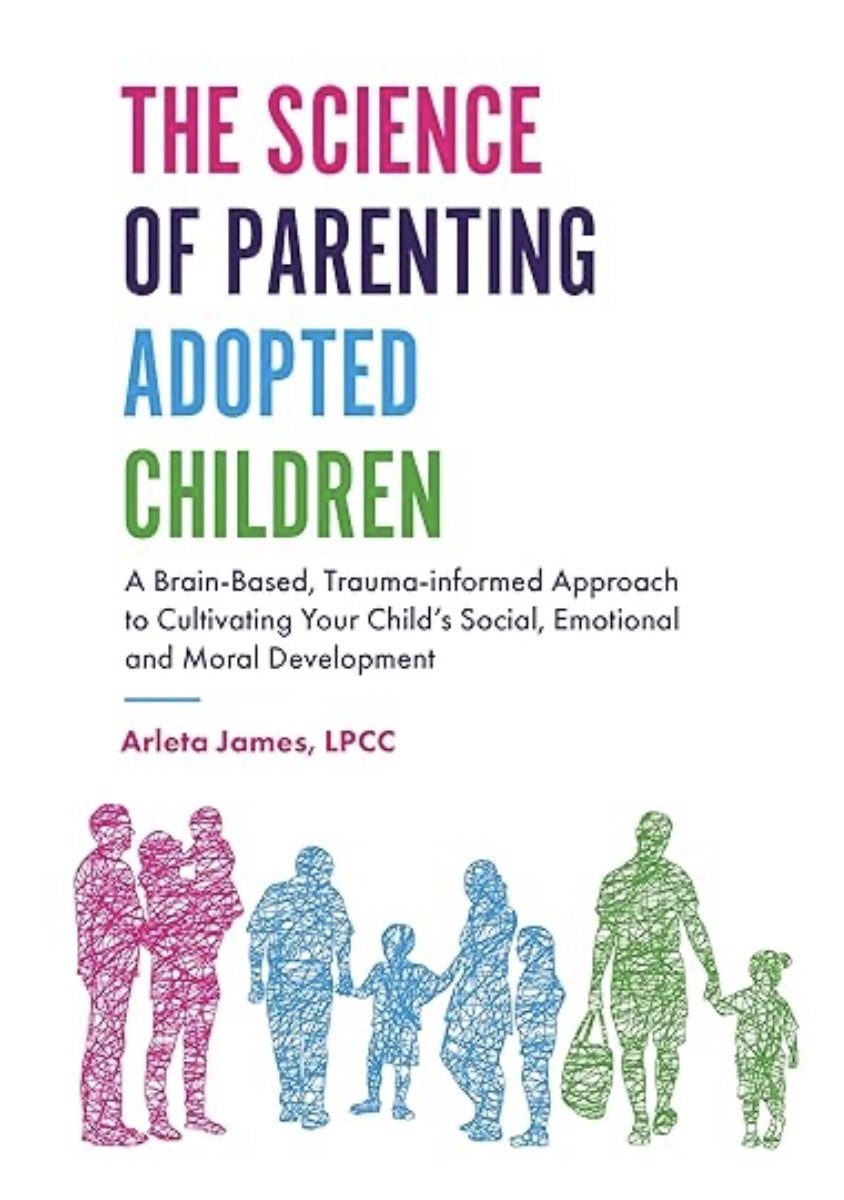
The Science of Parenting Adopted Children: A Brain-Based, Trauma-Informed Approach to Cultivating Your Child’s Social, Emotional, and Moral Development
— written by Arletta James, LPCC, in 2019
— Review written by Heather Gonzales, Book read in 2017, Review updated in 2021
Full Review & Considerations
This book was read by a group of adoptive parents who decided partway through that they did not think it was worth finishing, largely due to the degree of negative language used and the fact that there are other good books on parenting and trauma that they would rather read.
Exclamation points are included extensively throughout the book and create an overarching tone of exasperation, annoyance, and/or anger at adoptees/fostered youth and their responses to trauma.
Stories and examples given of adoptees and birth families overshare, and/or lack context in ways that encourage incorrect or incomplete assumptions by the reader, and/or are worded in a way that is unnecessary and shaming.
Language and wording about adoptees is often one-sided and incomplete, dismissive, and belittling. There are numerous references to “growing up the little adoptee” with no consideration for the fact that they often have to grow up beyond their years in childhood, and that this contributes to issues as well. The author speaks of adoptees as having the behaviors of a preschooler or a 3-year-old. This wording repetitively denounces adoptees as perpetually immature, and omits how trauma also causes children to perform at a higher age than developmentally appropriate/grow up too fast, and how this also contributes to observable behaviors. A discussion on adoptees trying “to control every situation all day long! …like Chinese Water Torture! Drip! Drip! Drip!” (p 79). Again, this excludes the whole context, the child’s history, and any consideration for the root of this response.
Some language places the full blame on adoptees and pits the adoptee against the rest of the adoptive family (p. 41) and lists 41 different ways adoptees negatively impact a
family without making any effort to offer context by also including aspects of the adoptive family, much less a list of possible abuses or neglect, that are also contributing factors to behaviors. The author includes a chart that starts with the adoptee being problematic (p. 43) - rather than starting with trauma and the histories that caused these responses.
Healthy communication and relationship building between adoptive parents and adoptees is discouraged, for example, the author writes, …because “We don’t need to explain to a 14-year-old who is 4 years old!” (p. 46). Calling a 14-year-old, a 4-year-old, is unlikely to generate the behavioral changes that are desired, and there are good reasons to explain things to a child with previous interpersonal trauma, which are supported by plenty of parenting, trauma, and neuroscience books and research.
© 2025, Heather Gonzales, Encompass Adoptees - All Rights Reserved
Please Note:
Lists and comments reflect the individual opinions of Heather Gonzales and are written from the perspective of an adoptee, for those looking for resources for adoptees or adoptive families specifically. Lists are not necessarily a reflection of all staff or Encompass Adoptees as a whole. At Encompass, we recommend that, whatever you read, no matter who recommends it or writes it, readers use critical thinking and that the content is reviewed in a thoughtful, contemplative, and reflective manner.
Additional lists, books, details, and reviews are added periodically.